
Malia Maynard
07/16/2026
Summer 2026 Bridal Rings: Tradition, Reframed
The season’s most compelling rings do not abandon tradition. They reshape it—with character, proportion, and a point of view.
Every era leaves its mark on bridal jewelry. Some are remembered for a particular gemstone or silhouette; others for a shift in the way couples think about meaning. Summer 2026 feels like the latter. The most interesting rings of the season are not defined by a single cut, setting, or metal. They are defined by intention.
Couples are looking for designs that feel personal without becoming temporary—rings with enough familiarity to feel timeless and enough distinction to feel entirely their own. A classic diamond may sit within an unexpected framework. An antique detail may be sharpened by modern proportion. A wedding band may be designed not as an accessory, but as part of the composition from the very beginning.
This is not a rejection of tradition. It is tradition, edited.


A Ring That Feels Like You
The clearest direction in bridal jewelry is also the most personal: individuality over convention. Rather than beginning with the question, “What is everyone wearing?” couples are asking, “What will still feel like us years from now?”
That answer may be found in a distinctive center stone, a setting with sculptural movement, or a small custom detail understood only by the person wearing it. It may also be quieter—a subtle change in scale, an unexpected negative space, or a band that follows the architecture of the engagement ring with absolute precision.
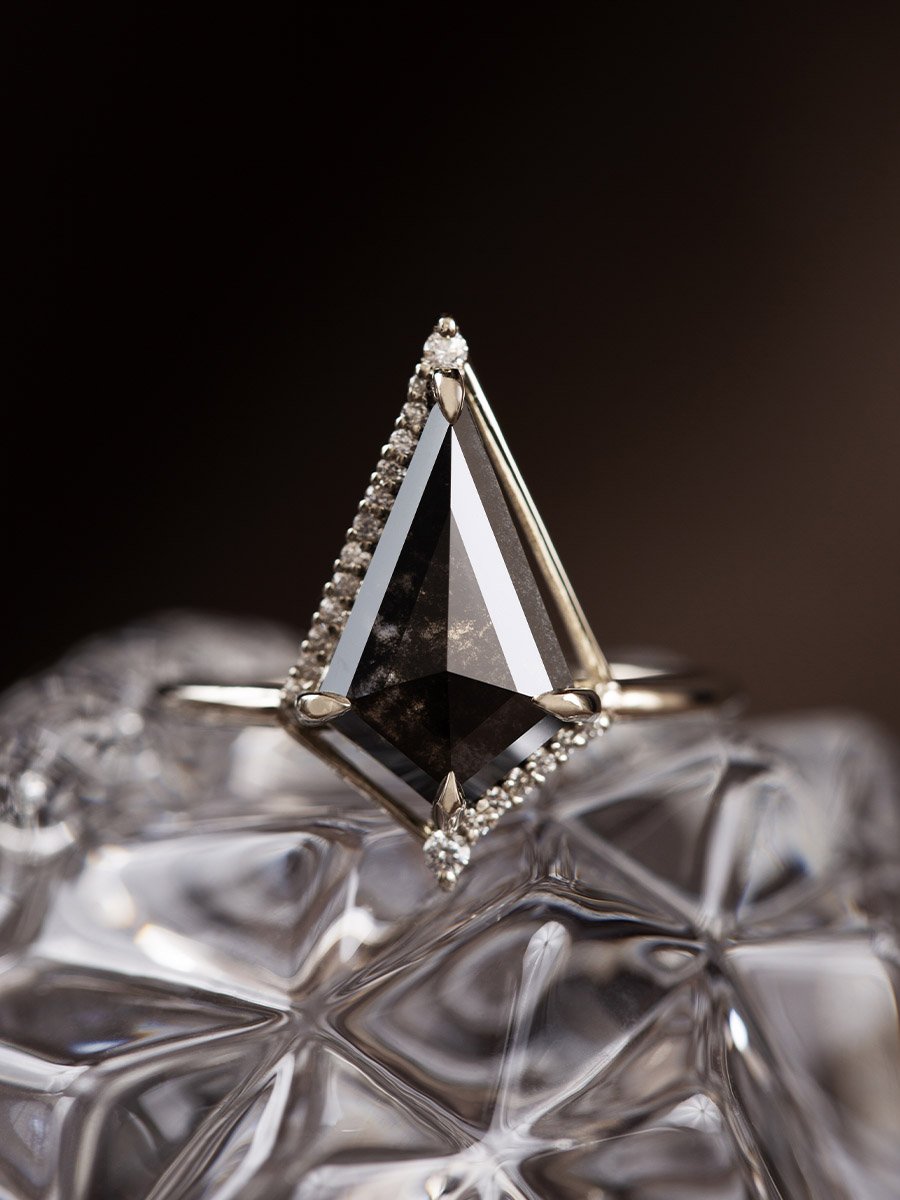
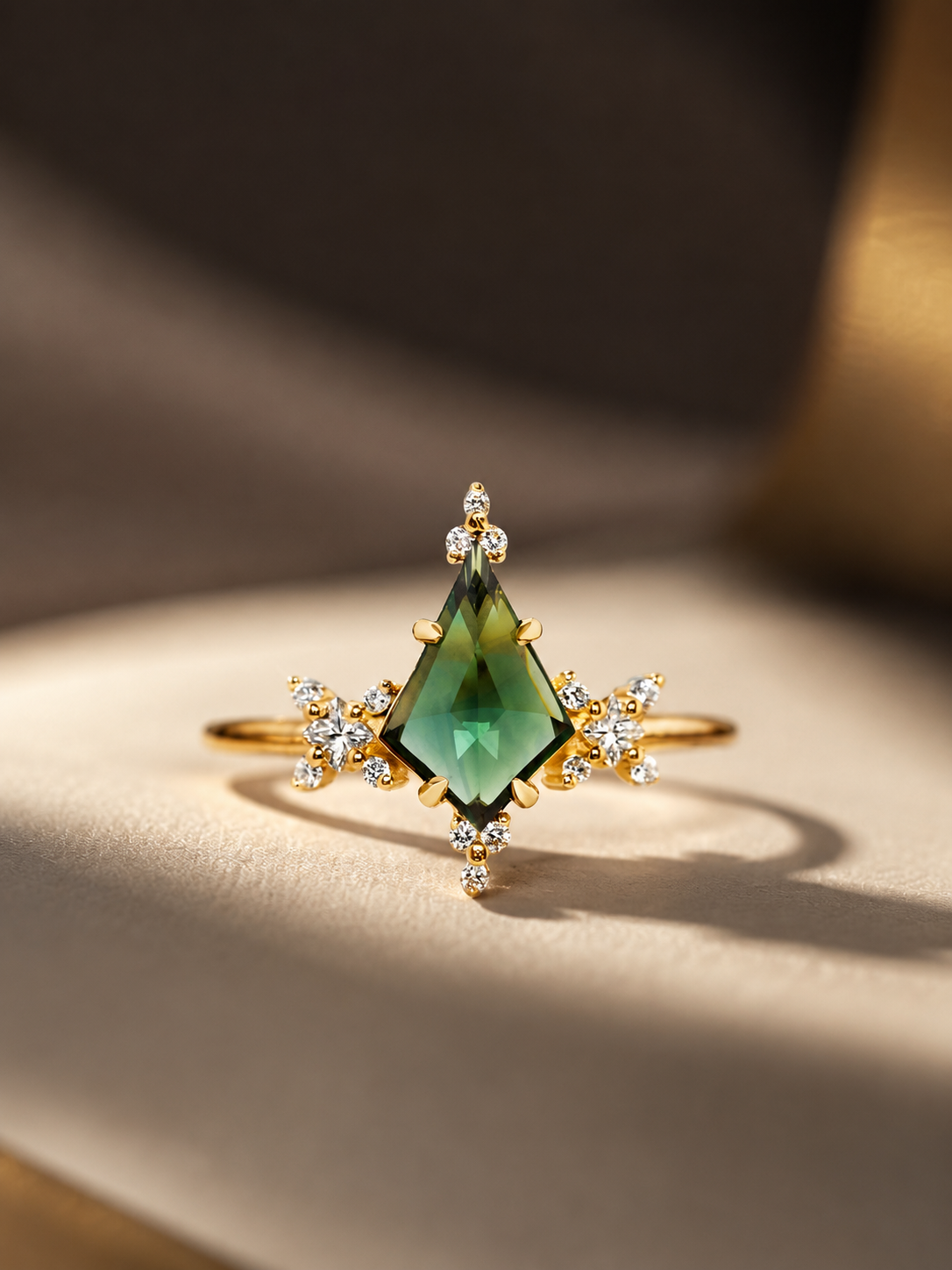
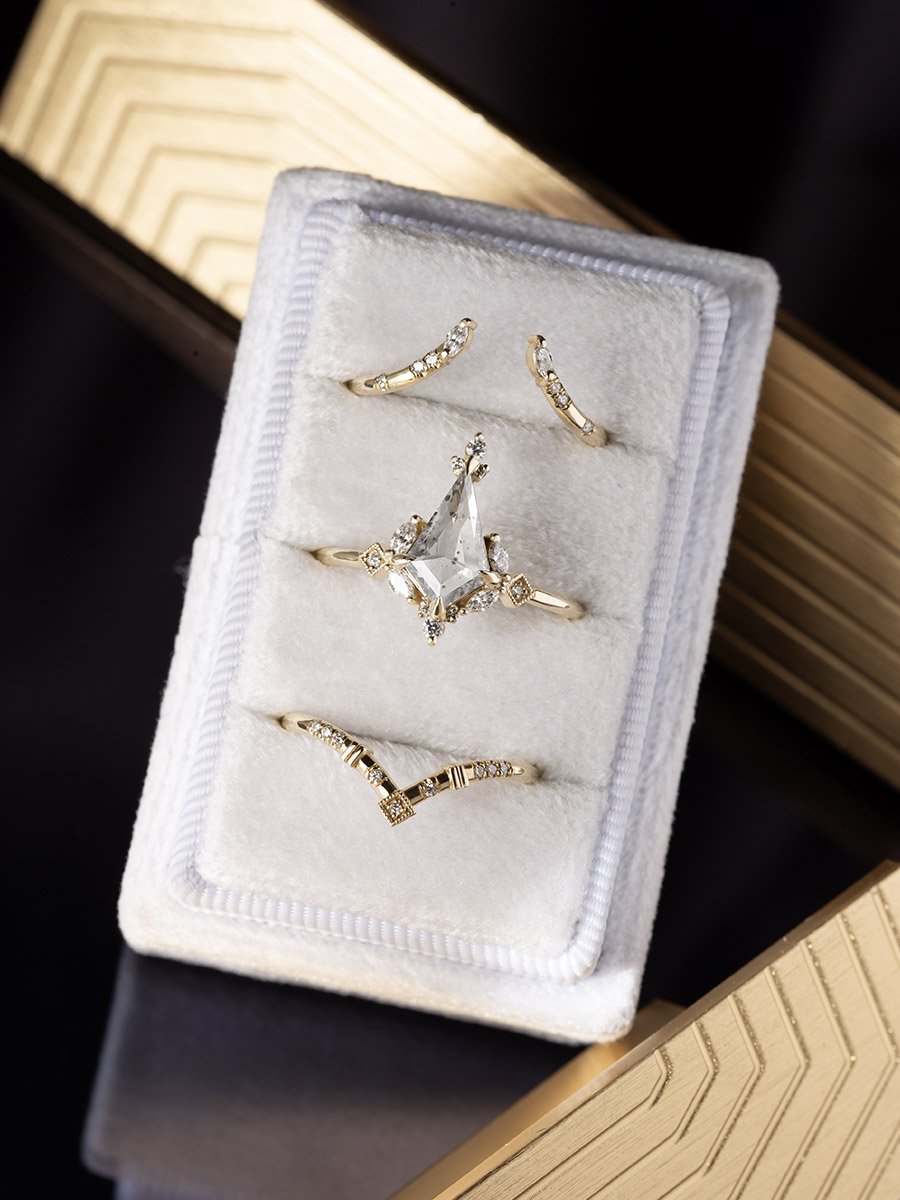
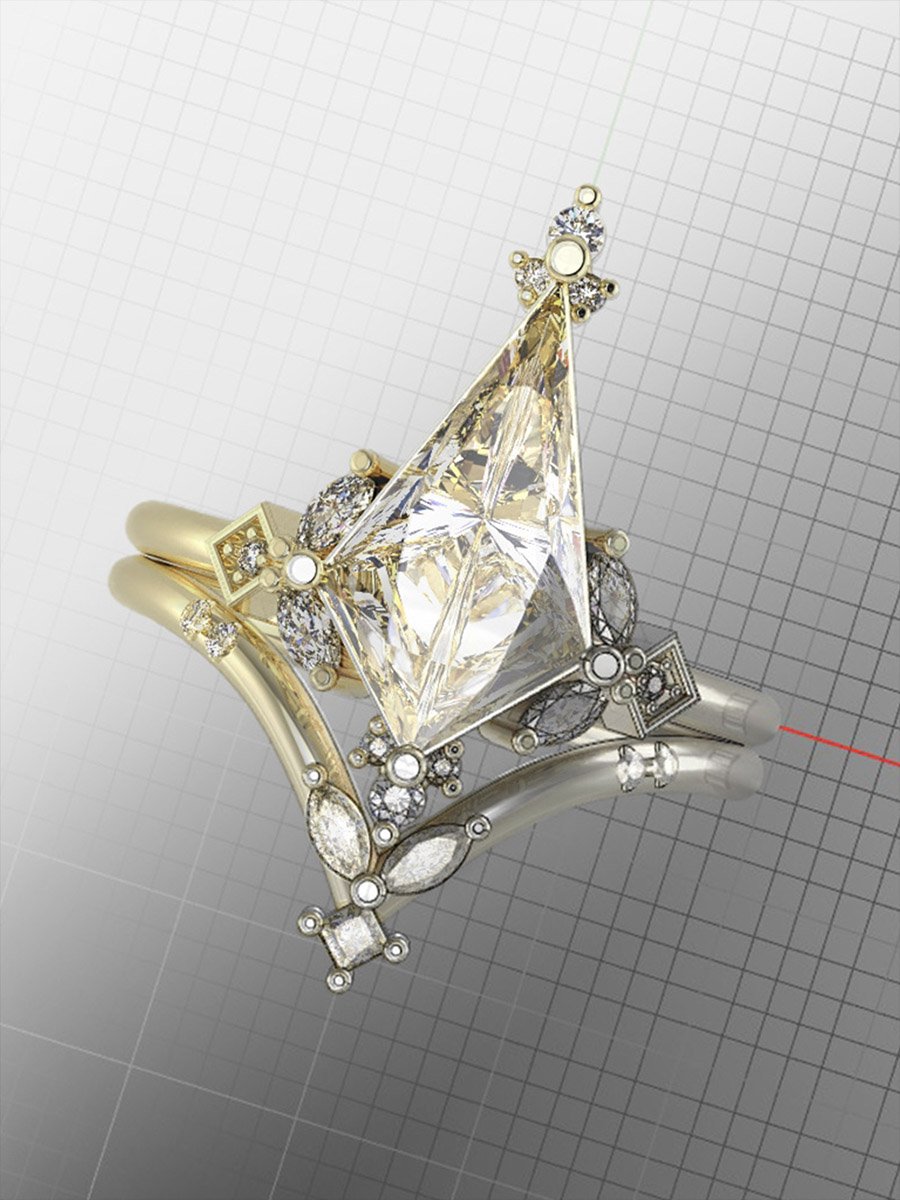
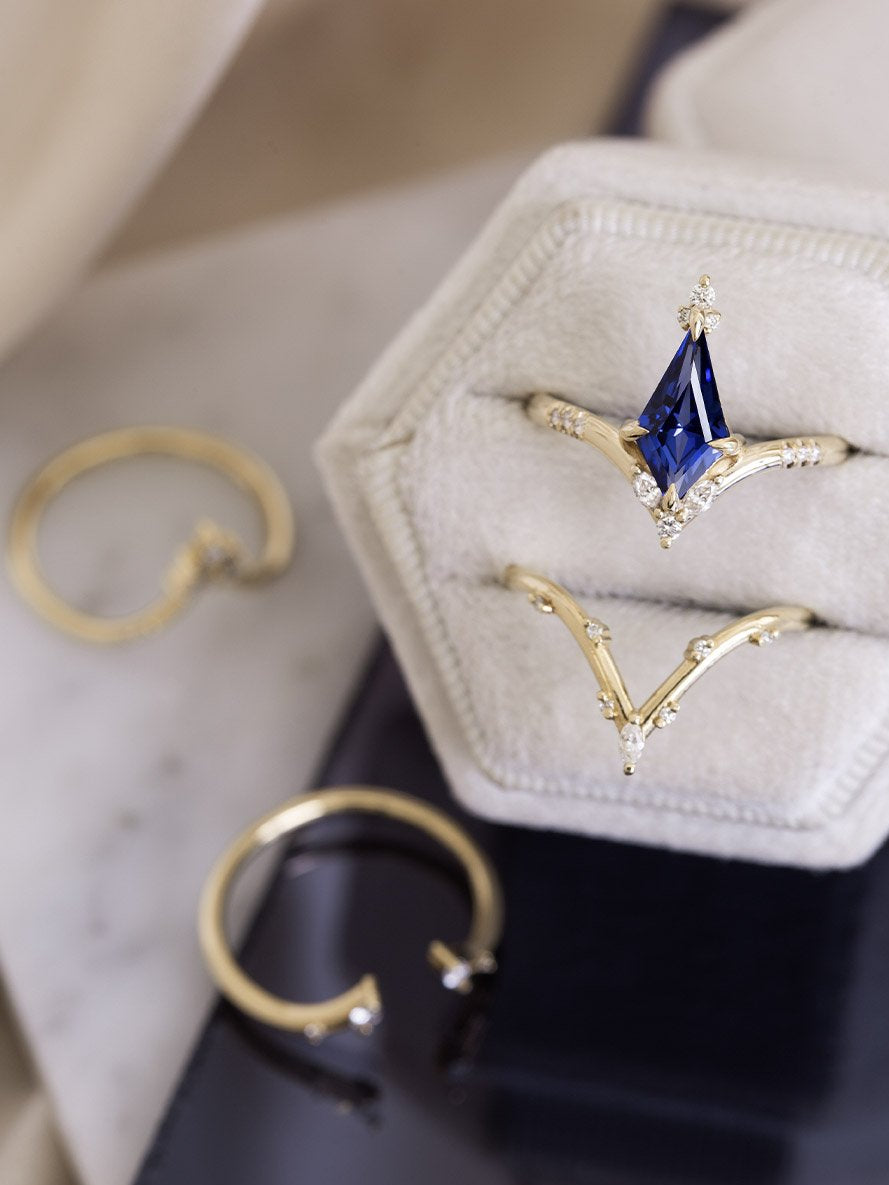
The result does not need to be loud to be individual. In fact, many of the strongest designs rely on restraint. A familiar form becomes memorable when every line is considered: the angle of a kite diamond, the rhythm of the side stones, the way a curve meets the finger, or the balance of open space around the center.
Individuality is not about adding more.
It is about knowing what belongs.
Vintage Structure, Modern Proportion
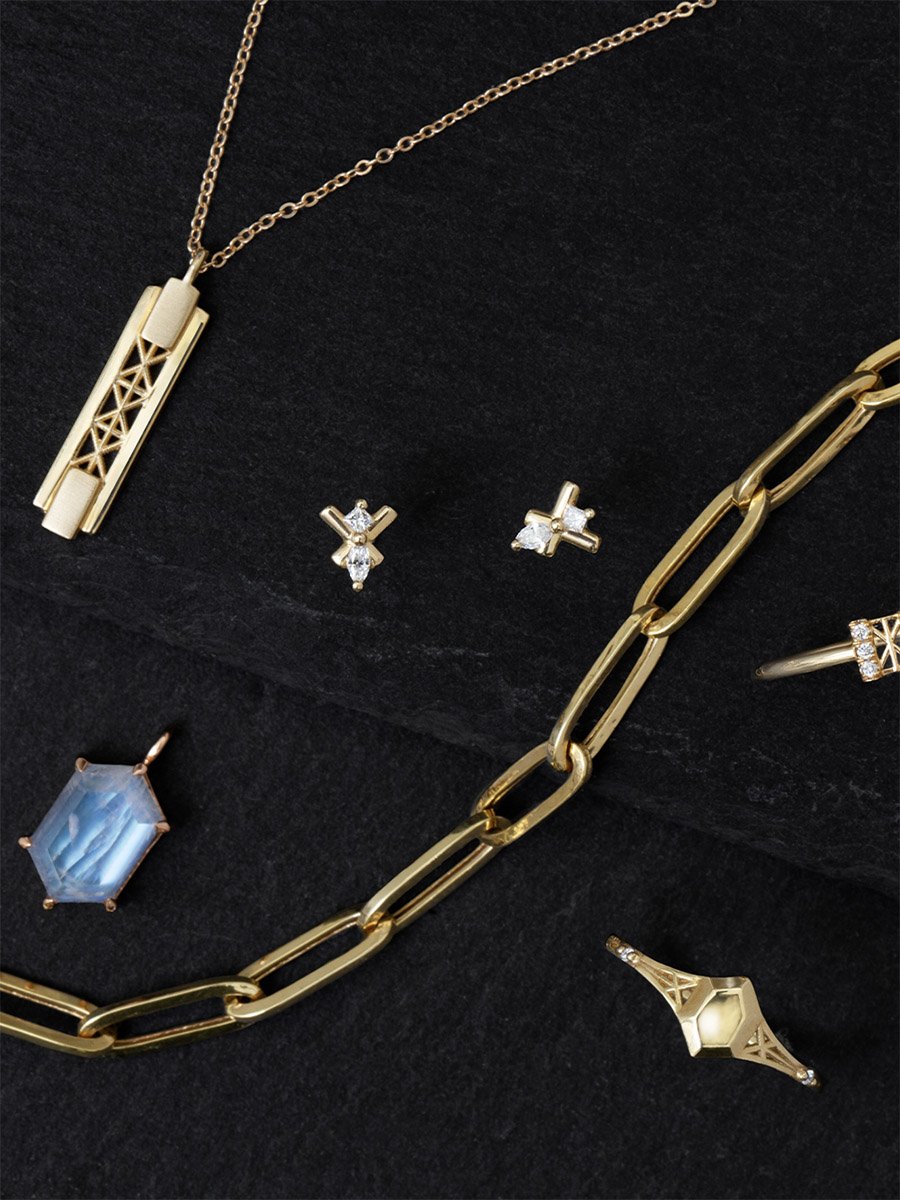
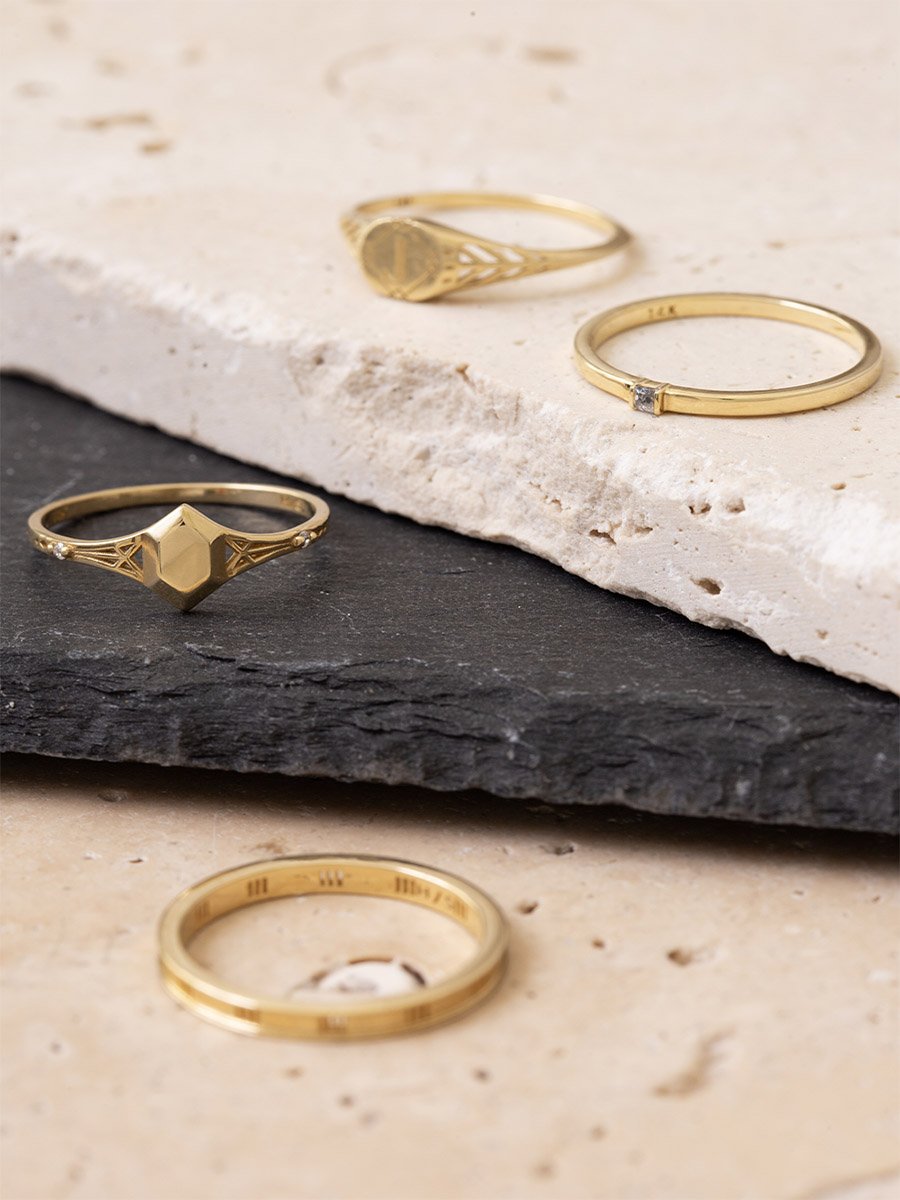
Art Deco and vintage-inspired details remain relevant, but their appeal in 2026 is less about nostalgia than structure. Geometry, symmetry, milgrain, step cuts, and carefully framed stones bring order to a design. When these elements are reworked with cleaner spacing and contemporary proportions, the result feels both established and new.
This balance is central to modern bridal design. A ring can carry the romance of an heirloom without feeling like a reproduction. It can borrow the discipline of Art Deco while leaving room for softness, movement, and negative space. The goal is not to recreate the past exactly, but to understand what made it enduring—and move it forward.
For HIDDENSPACE, this is where tradition becomes most interesting—not as a fixed rule, but as a foundation. The most successful ring preserves the emotional familiarity of bridal jewelry while introducing a point of view through proportion, construction, and detail.

Lab-Grown, Chosen with Intention
Lab-grown diamonds have become an established part of modern bridal jewelry, particularly for couples who want greater freedom in scale, cut, or budget. Their appeal is not simply that they allow for a larger center stone. They also make it possible to prioritize the complete design: a more distinctive setting, a perfectly fitted band, or the details that give the ring its identity.
Because lab-grown and natural diamonds share the same essential optical and chemical properties, the visual decision can remain focused on shape, proportion, and quality. An elongated emerald cut can emphasize clean architectural lines. A pear or kite shape can bring movement. A larger round or oval can create presence while allowing the surrounding design to remain restrained.
The most thoughtful choice is the one that aligns with the wearer’s values and priorities. Natural and lab-grown diamonds offer different forms of rarity, value, and story. Neither needs to imitate the other. What matters is choosing with clarity—and designing the ring around that choice with purpose.


The Complete Composition
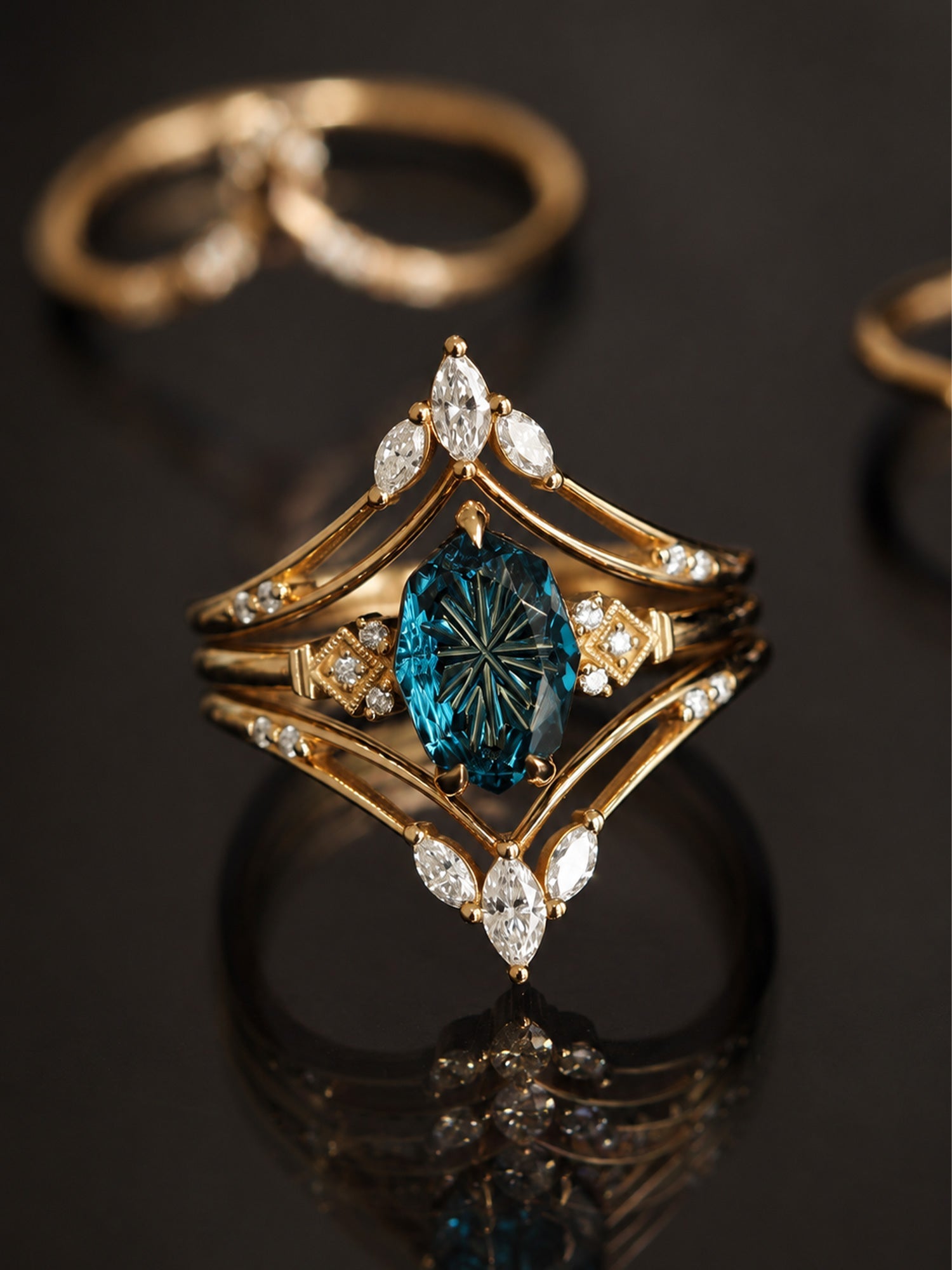
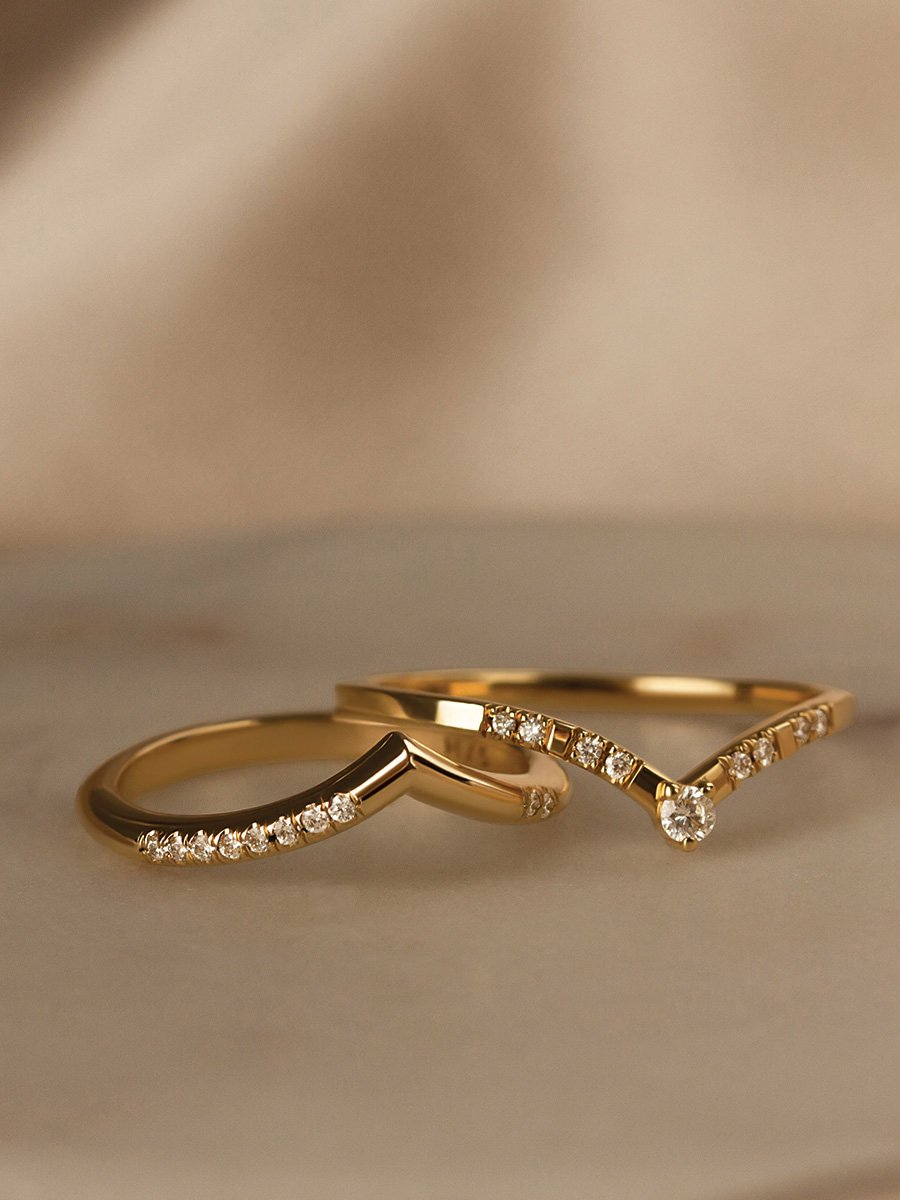
The engagement ring is increasingly being considered as the beginning of a composition rather than a finished object on its own. Matching bands, contour bands, and open bands allow the design to expand while preserving the relationship between every line.
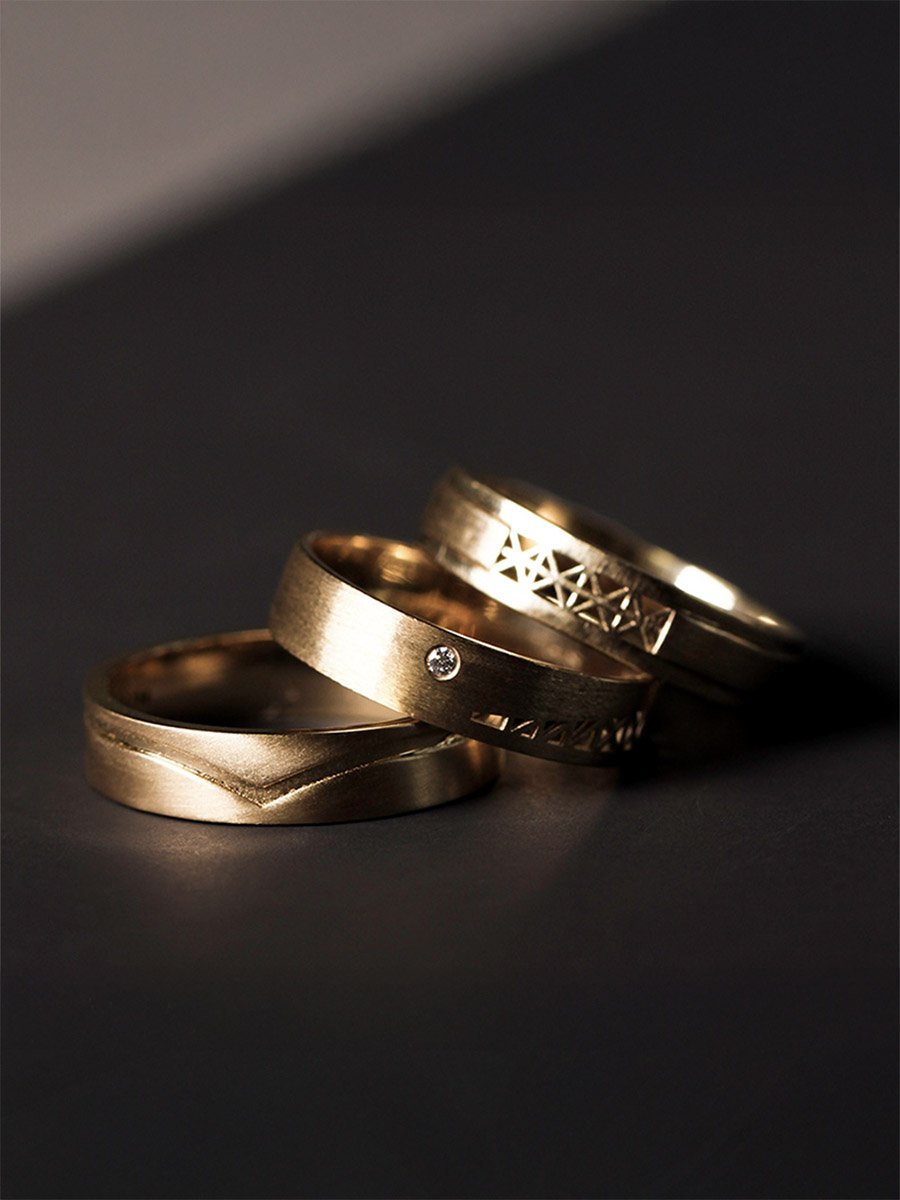
A true perfect-fit band does more than sit beside the engagement ring. It follows its silhouette, responds to its scale, and creates intentional spacing. The two rings may mirror one another, or they may introduce contrast through texture, stone shape, or rhythm. What connects them is not sameness, but balance.
Designing the set together from the beginning makes that balance feel effortless. Curves meet cleanly. Negative spaces appear deliberate. Accent stones align with the center rather than competing with it. When worn alone, each ring has its own identity; when stacked, they read as one complete piece.
This approach also leaves room for the story to continue. An anniversary band can be added years later. A new texture or diamond shape can mark a milestone without disrupting the original composition. Over time, the stack becomes more than a styling choice. It becomes a record of a life being built.

